A World at War: A Series on the Democratic Party in America Part 2
February 7, 2019
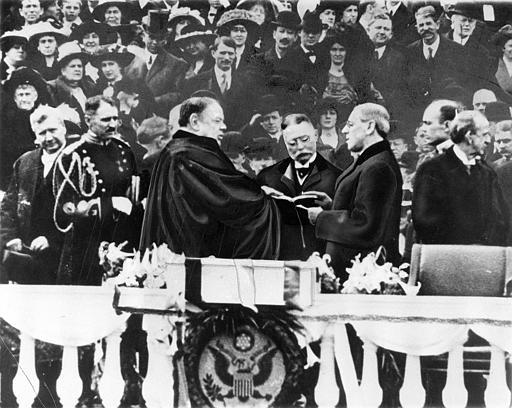
In 1920, the Democratic Convention opened in San Francisco with a speech by Homer Cummings, who honored second term President Woodrow Wilson as ‘immortal’ for his work with the Treaty of Versailles by saying “In one sense it is quite immaterial what people say about the President. Nothing we can say can add or detract from the fame that will go down the unending channels of history.”
This election, our eventual participation in World War I, and his domestic acts which contributed to President Franklin D. Roosevelt’s New Deal caused Wilson to be seen as a hero, according to history books.
However, the business partnership between a private bank, the Federal Reserve, and the American government has received much criticism, especially in recent years, as the Fed surpasses the legal boundaries it once expressed in favor of thug like tactics, wage garnishing, and interest rates that penalize the lower middle class. To this day, the Federal Reserve Bank dominates the global financial industry. Wilson indebted this country to the Federal Reserve during World War I to the tune of billions of dollars. His administration took control of American railroads, demanded America fight for democracy in defunct European nations after the armistice, and expanded government at home. While Wilson received the Nobel Peace Prize for his role in the League of Nations, Congress never supported America’s participation in the organization and Wilson lost his re-election bid to a Republican candidate by a landslide.
While the League of Nations continued to extend influence around the globe, America continued to assert its power in the Western hemisphere, especially in Mexico. Before leaving office, President Wilson inserted American agendas in Mexico, Cuba, Haiti, Panama, the Dominican Republic, Nicaragua, and other areas of Latin America. America’s influence in the region were seen as anti-Hispanic, corporate-driven for economic gain, and gave America control over foreign debt, sinking the United States further into economic compromise.
Peasant resistance in the Dominican, civil unrest in the Mexican Revolution, and the “Banana Wars” throughout Central and South America were all orchestrated for economic gains at the expense of the American taxpayers who were forced to finance Wilson’s foreign policy. While Wilson was not the only president to lead America into conflict with Latin America, his administration exceeded the efforts of past presidents by expanding American’s reach in the region and indebted our country in the process.
Most will be surprised that America once militarily occupied the Dominican Republic and handpicked Haiti’s president after a long occupation there. Nicaragua avoided military occupation by the United States through “diplomacy” and was able to transfer their foreign debt to the United States while receiving 3 million in exchange for rights to build a canal and naval base in that country. The canal was never built after many failed attempts.